
It is a well-known phenomenon: You are in the market for new wheels, and suddenly you start seeing cars for sale everywhere. Many low-mileage vehicles are available from individual sellers rather than dealerships, but how do you buy one if you do not have the full purchase price in cash? A private-party auto loan from InTouch Credit Union might be just what you are looking for.
A private-party auto loan can help you finance a vehicle purchased directly from an individual rather than a dealership. Because there is no dealer handling the transaction, you may need to gather information about the vehicle, arrange payment with the seller and complete the title-transfer paperwork yourself. Knowing what to expect ahead of time can help make the purchase go more smoothly.
What to Know When Buying From a Private Party
Buying from a private party can often be a less expensive option than buying from a dealer, but you will want to do your research before you jump in. ITCU’s auto buying help resources can help you compare rates, estimate payments and review additional vehicle-protection and insurance information.
The Private-Party Auto Loan
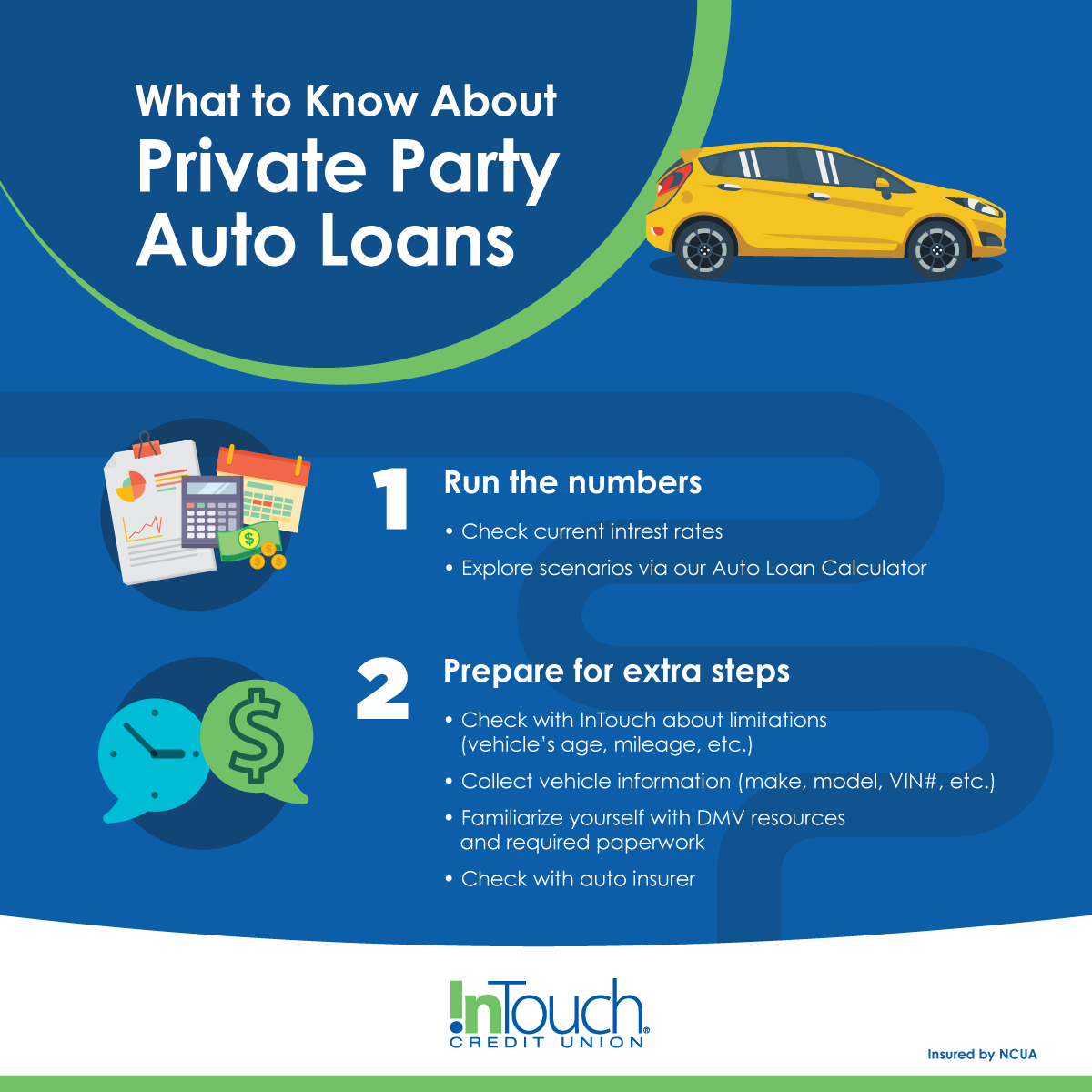
While a private-party auto loan works just like any other auto loan, there are often a couple of extra steps you will need to take to be sure you get it all done properly. For example, review ITCU’s used auto loan options and check with us about any age, mileage or vehicle requirements that could affect eligibility, available terms or the amount you can finance.
When it comes time to purchase, you will have to provide extra information about the vehicle that would usually be supplied by a dealer. This includes make, model, year, mileage and the vehicle’s unique vehicle identification number (VIN). As with every used vehicle, it is always a good idea to have the car checked out by a trusted mechanic who can also help you capture this information if you are not sure of where to find it.
At this point you might be thinking that it would be easier to get a personal loan, but there are good reasons to use loans specific to vehicles. The main reason is that personal loans are often unsecured, while an auto loan is secured with the car as collateral, so the rate and terms can be much more favorable.
How a Private-Party Auto Loan Works
- Apply for financing or seek auto loan preapproval. Establish a potential budget before committing to a vehicle.
- Choose an eligible vehicle. Confirm that the vehicle’s age, mileage, condition and value meet applicable lending requirements.
- Collect information from the seller. Obtain the VIN, make, model, year, mileage, title information, purchase price and seller details.
- Inspect and research the vehicle. Consider an independent mechanical inspection and review available vehicle-history information.
- Finalize loan approval. The lender may verify the vehicle’s value, title, ownership and eligibility.
- Complete payment and title transfer. Follow the lender’s instructions for paying the seller and completing state-required documents.
- Register and insure the vehicle. Confirm insurance requirements and complete the registration process.
Private-Party Purchase Paperwork
Do you know what your state requires to transfer the title and registration for a privately purchased vehicle? Get familiar with your state’s Department of Motor Vehicles or Secretary of State. Most states have handy, online resources, including printable forms, such as bill of sale, temporary tags, documentation checklist, etc. Be careful to get the paperwork in order. It might be inconvenient to go back to the seller for signatures or other information after the fact.
Check with your auto insurance provider, as well, to understand your responsibilities for alerting them to your new purchase, so you know that you are covered as soon as you take possession. Lastly, be sure you know how the loan will be paid out (a check disbursement to the seller directly, for example). That will save you from having to wonder how you will actually make the exchange of payment for the vehicle.
Information and Documents You May Need
- Vehicle identification number
- Make, model and model year
- Current mileage
- Purchase price
- Vehicle title
- Seller’s name and contact information
- Signed bill of sale
- Registration or title-transfer forms
- Proof of insurance
- Existing lien or payoff information
- Vehicle inspection or valuation information
- Identification, income and application documents
Requirements vary by lender, vehicle and state. Confirm the current requirements before completing the purchase.
Ready to Finance a Private-Party Purchase?
Contact InTouch Credit Union to discuss the vehicle, documentation and next steps, or explore our auto loan options before completing the purchase.
Helpful Auto-Related Articles
| Buying a Car Online | Used Vehicle Blues | A Step-by-Step Guide to Buying your First Car |


